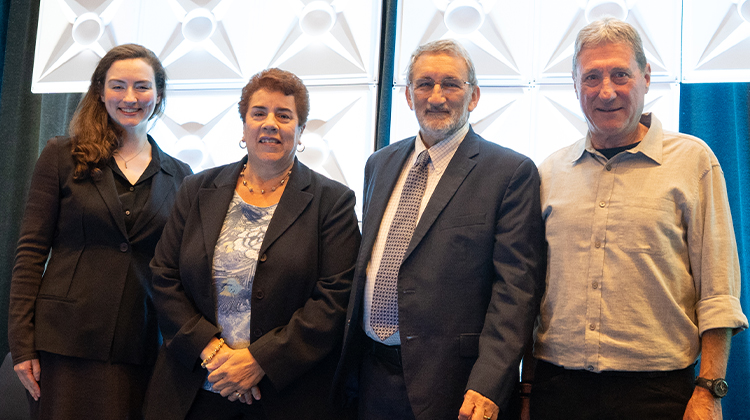
AIRROC marked its 20th anniversary with a panel discussion that highlighted the organization’s journey, its evolving role in the re/insurance sector, and its vision for the future. The panel featured Andrew Maneval, founding Chair of the Board of AIRROC; Jonathan Rosen, founding Board member and past Chair; and Marianne Petillo, founding Board member, past Chair, and current Board member. The discussion was moderated by Layla Trummer, outgoing Chair of the AIRROC NextGen Council.
History
The panel opened with reflections on the origins of legacy. Maneval traced the roots to the 1980s liability crisis — a period marked by high interest rates, soft insurance markets, and emerging exposures from asbestos, pollution, pharmaceuticals, and other risks.
He described the early perception of runoff and legacy: “Runoff was thought of as the place where careers went to die. The idea of making it a professional specialization, an area of expertise, experience, and sophistication, was part of the challenge.” Forming AIRROC helped to elevate runoff into a recognized area of expertise, fostering professionalism, collaboration, and ongoing training within the industry.
Creating a Forum
Rosen noted that by the time AIRROC was formed, the concept of runoff had existed for decades but lacked formal networking opportunities in the US. He contrasted this with Europe and the UK, where he remarked that the stigma was not the same. Markets like Lloyd’s had established Solvent Schemes of Arrangement and a more collegial approach to runoff. In the US, he explained, companies were often managing disputes, collecting premiums, and litigating against each other.
He emphasized that AIRROC filled a critical gap, creating a forum where industry professionals could network, transact deals, and share knowledge. “I had a lot of relationships, but I had no friends,” Rosen recalled. AIRROC finally gave people a place to be civil and connect with each other instead of simply meeting in court or arbitration.
Relevance
Maintaining AIRROC’s relevance over 20 years has been an ongoing focus. Maneval, Rosen, and Petillo highlighted the organization’s adaptability through different market cycles.
Petillo explained that the 2008 financial crisis led to a drop in member companies due to insolvencies and consolidations. AIRROC’s former Executive Director Carolyn Fahey expanded the membership to include non-risk-bearing entities, welcoming brokers, law firms, consultants, and other service providers as Corporate Partners — broadening perspectives and strengthening participation within the organization.
Petillo also spoke about initiatives that deepened AIRROC’s educational and professional development offerings. AIRROC’s Education Committee continues to bring top tier programming to all AIRROC events. The creation of the Certified Legacy Professional (CLP) designation provided emerging professionals a pathway into the legacy space. When the Board committed and led by example, interest grew — 10 of the 12 current board members now hold their CLP, she noted.
NextGen
AIRROC’s NextGen program was also highlighted in the discussion. Trummer shared her gratitude for the opportunities that AIRROC’s NextGen Council has given her to connect with peers and Board members, and exposure opportunities like speaking on panels. She spoke about her vision for AIRROC’s continued growth to be driven by more carriers proactively thinking about legacy, noting that there are very few “forever balance sheets” in the industry.
The panelists expressed confidence in NextGen’s role in shaping AIRROC’s future, already reflected in the appointment of Katie Reynolds as AIRROC’s current Executive Director (Reynolds previously served as a Board member and before that Chair of the AIRROC NextGen Council).
Looking Ahead
Looking forward, the panel stressed the need for AIRROC to continue fostering collaboration, education, and innovation. Rosen emphasized that runoff and legacy are integral to the live insurance market: “There is a symbiosis that’s associated with it. All that you need to keep relevant is to keep current.” AIRROC’s role, he said, is to help the industry adapt — not just survive.
Petillo added that active leadership and strategic board engagement have been key to sustaining AIRROC’s relevance: “The Board has been very active and engaged. Regardless of who has been on the Board, there has never been a level of commitment that they wouldn’t accept.” Regular strategy sessions and openness to new ideas keep the organization vibrant.
Maneval agreed, highlighting the organization’s role in reframing how the industry views runoff: “Ultimately every policy, every book of business, every company eventually results in runoff.” AIRROC, he said, helped transform what was once perceived as a dead-end assignment into a respected and essential specialty.
As AIRROC looks ahead to the next 20 years, its focus will remain on expanding opportunities, nurturing the next generation of industry professionals, and supporting the evolving definition of legacy. By combining education, networking, and professional development, AIRROC continues to provide enduring value to its members and the legacy market.

