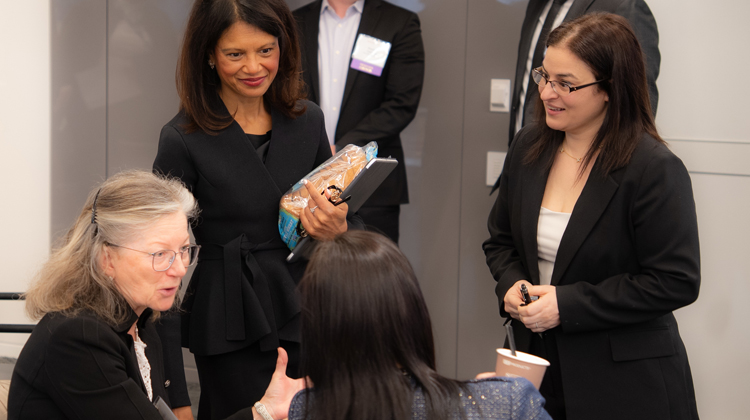
Mina Matin, co-head of Insurance Litigation for Norton Rose Fulbright, joined by Lisa Schapira, senior counsel, presented “Emerging Claims Trends in Insurance,” a review of key trends and legal developments in insurance claims related to ultra-processed foods, hair relaxers, and microplastics. This presentation and its wealth of detail will be available on the AIRROC website in “AIRROC on Demand.” Below is a summary of the key points:
Ultra-Processed Foods
Wielding a loaf of “Non-GMO” certified 100% Whole Wheat bread, Ms. Matin demonstrated the difficulty of determining where the line is between healthy food and processed food. First of all, there is a definitional issue. There is a generally regarded list of categories ranging from unprocessed or minimally processed foods (Group 1) to the most heinous of these categories (Group 4) that is the subject of emerging personal injury litigation: “Ultra-Processed Foods.”
- Definition:
- No federal scientific definition exists yet; the FDA/USDA is working on one. The NOVA classification system defines ultra-processed foods (UPF) as industrial formulations with ingredients not typically used in home cooking.
- Regulations:
- Currently these foods (especially given the proclivities of Robert Kennedy, the Department of Health and Human Services Secretary) are getting increased regulatory attention.
- The Federal Food, Drug, and Cosmetic Act governs food additives and GRAS (generally recognized as safe) ingredients. The FDA has improved labeling requirements, including disclosure of added sugars and specifying serving sizes.
- State laws like California AB 1264 and Arizona’s Healthy School Act address UPF concerns.
- Scientific foundation for injuries alleged:
- WHO (World Health Organization) and CDC recognize UPF as a major driver of obesity.
- Evolving Research: Studies, such as the British Medical Journal (BMJ) umbrella review (2024), link UPF exposure to adverse health outcomes, including cardiometabolic disorders, mental health issues, and mortality.
- Litigation has started but is still evolving:
- Individual complaints, e.g., Martinez v. Kraft Heinz Co., (E.D. Pa) allege addiction and health issues caused by UPF. (The complaint was dismissed but the plaintiffs are seeking leave to amend).
- California litigation (e.g., People of the State of California v. Kraft Heinz Co.) claims UPF addiction has created a public health crisis, citing violations of unfair competition laws and public nuisance.
- Insurance Considerations:
- Coverage issues include whether there is a valid “occurrence,” whether the “expected/intended” provisions bar cover, causation, the meaning of “bodily injury” and timing as to whether the alleged injuries fall within the relevant coverage period. Also, there will be allocation issues.
Hair Relaxers
- Definition:
- Chemical products used to straighten curly or coily hair, predominantly marketed to women of color. Ingredients include formaldehydes, phthalates, parabens, and BPA, which may disrupt hormones and increase cancer risk.
- Regulations:
- The FDA regulates hair relaxers as cosmetics but has not banned formaldehyde.
- California’s Toxic-Free Cosmetics Act (effective 2025) imposes restrictions.
- Scientific foundation for injuries alleged:
- The National Institute of Health (NIH) and National Institute of Environmental Health Sciences (NIEHS) Sister Study (2022) found frequent use of hair relaxers increases uterine cancer risk.
- Emerging studies link hair extensions to cancer and reproductive harm.
- Litigation:
- MDL 3060 consolidated hair relaxer lawsuits in N.D. Illinois in 2023, with over 15,000 cases as of March 2026.
- Claims include negligence, strict liability, failure to warn, consumer protection violations, fraud, and unjust enrichment.
- Bellwether trials are expected to begin in 2027.
- Insurance Considerations:
- Issues include aggregation, causation, timing of injury, and exposure quantification.
Microplastics
- Definition:
- Plastic particles smaller than 5mm, found in various environments and human bodies. Nanoplastics are even smaller (<1 micrometer). Common sources include personal care products, textiles, tires, and agriculture.
- Regulations:
- Microbead-Free Waters Act of 2025 bans rinse-off cosmetics with microbeads.
- California and Oregon have enacted laws and/or administrative regulations addressing microplastic pollution and lifecycle impacts.
- Litigation:
- Greenwashing/false labeling cases (e.g., Daly v. Wonderful Co.) allege deceptive marketing of products as safe or eco-friendly.
- Public nuisance cases (e.g., People of the State of California v. Exxon Mobil Corp.) claim microplastics cause environmental and health harm.
- Shareholder litigation (e.g., In re Danimer Scientific, Inc.) alleges failure to disclose environmental risks affecting stock value.
- Insurance Considerations:
- Long-tail liabilities, causation issues, and developing science on microplastics’ health effects are key concerns.
Other Emerging Risks including climate change, geopolitical risks, social media, Ozempic, sex abuse/trafficking, and ethylene oxide (ETO).

